

Our Mission
Bait • Catch • Donate empowers DMV-area teenagers to protect local waterways while helping fight food insecurity. Through organized fishing expeditions, volunteer anglers remove invasive blue catfish from the Potomac River and Chesapeake Bay, and donate the catch to local food banks, where the fresh fish is transformed into nutritious meals for families facing food insecurity. Every teenager participates in hands-on environmental and community stewardship, with each invasive catfish removed helping restore the Chesapeake Bay ecosystem while providing a valuable source of healthy protein for local communities. Every fishing trip demonstrates that a single afternoon on the water can strengthen both the health of the Bay and the well-being of our neighbors.
Our Vision
Our vision is a DMV where every high school student has the opportunity to spend a day on the water doing something that matters—protecting the Chesapeake Bay ecosystem in and around where they grew up and donating the catch to help ensure more families have access to healthy protein sources. We're building a replicable model that any school, sports team, scout troop, or friend group can adopt.
Why are blue catfish so detrimental to the Chesapeake Bay watershed? These fish are dubbed “malicious but delicious” for good reason. In 1974, the Virginia Department of Wildlife Resources introduced blue catfish in the upper regions of the James River, with the intention of supporting recreational fishing. While it was believed blue catfish would remain in freshwater rivers, it turns out they also thrive in brackish water, and have ended up swimming through the Chesapeake and into all of its major tributaries. Along the way these invasive predators consume large amounts of species native to the Chesapeake Bay including enormous amounts of blue crabs, as well as rockfish, oysters and clams. By devouring valuable native seafood species, blue catfish have caused significant damage to the local commercial fishing industry and even outcompete native wildlife for food.
For several years now, a movement has been growing to essentially fish and eat our way out of the problem. This includes federal- and state-sponsored programming in Maryland and Virginia to increase fishing efforts, raise public awareness, and drive a pipeline for consumption in restaurants, schools and grocery stores.
For food banks, this creates a tremendous opportunity to offer a healthy protein source for those who otherwise cannot afford it. Blue catfish is rich in Omega 3 fatty acids, Vitamin D, potassium, and unsaturated fat.
And let’s not forget that blue catfish is quite delicious. While other types of catfish sometimes get a bad rap, chefs and foodies alike agree that blue catfish actually tastes and smells like striped bass. It is great for fish n’ chips, fish tacos or a fish sandwich.
Bait Catch Donate is proud to be a part of the solution – one boat at a time!

Our Story
HOW IT STARTED
From our Founder Harry Klisch:
I've been fishing my whole life. I remember catching my first rockfish at the age of six, along with many summer days spent on my grandma’s pier near the South River checking the crab traps or casting a line. The conversation about the Chesapeake Bay growing up was always on conservation – mostly what to do to protect and bring back crab and oyster populations. Then I learned about the blue catfish problem — an invasive species destroying the native ecosystem of the Bay — and even eating native species that are economically and ecologically important to the Bay like rockfish, blue crabs and even oysters and clams. It struck me that the whole point in fishing bluecats is to literally remove as many as possible in order to protect these other native species. I was also pleasantly surprised to find that catfish are a meaty, white flaky fish known to be tasty. So I started thinking: what if a day of fishing could actually mean something?

THE INAUGURAL TRIP
I recruited and helped organize a day of fishing out of Tantallon Marina in Fort Washington, Maryland. On April 18, 2026, 13 volunteer anglers across 5 local schools showed up at noon, and by the end of the day we'd pulled 60 blue catfish out of the Potomac River. The captain's crew fileted everything on the spot. That same day, we transported the filets to Bread For The City, who we coordinated with in advance to accept our raw protein donation. Bread For The City then converted the 60+ lbs of raw protein into more than 240 meals for local families.

WHAT'S NEXT
That one trip proved the concept. Now I'm building Bait • Catch • Donate into a framework that any school, sports team, scout troop, or youth organization can replicate across the DMV — and eventually beyond it. We're hoping to expand to multiple trips per season, attract more volunteer anglers to recruit for and lead these trips, and partner with more food banks across the DMV.
At least initially, we plan to fund the program through grassroots fundraising and community support. Volunteer anglers are tasked with fundraising to cover their own charter cost (~$1000 per charter), or, they can apply for a sponsored trip backed by donations to Bait • Catch • Donate. Donations from neighbors, family and friends, community businesses, and corporate sponsors are all key to putting more teens on the water.
We have partnered with the Don E. Riddle Leadership Institute, a Maryland non-profit focused on education and youth leadership, to serve as our fiscal sponsor. Through their affiliation, donations to Bait • Catch • Donate are tax deductible. We are also looking into grants as another source of funding, particularly those focused on environmental conservation of the Chesapeake Bay watershed. Through individual donations, corporate sponsorships and grants, we hope to share the experience of Bait • Catch • Donate with as many interested teenagers as possible.

Contact Us
Please fill out the below form and let us know how you'd like to get involved. You can also send an email to info@baitcatchdonate.com
Our Leadership

Harry Klisch · Founder
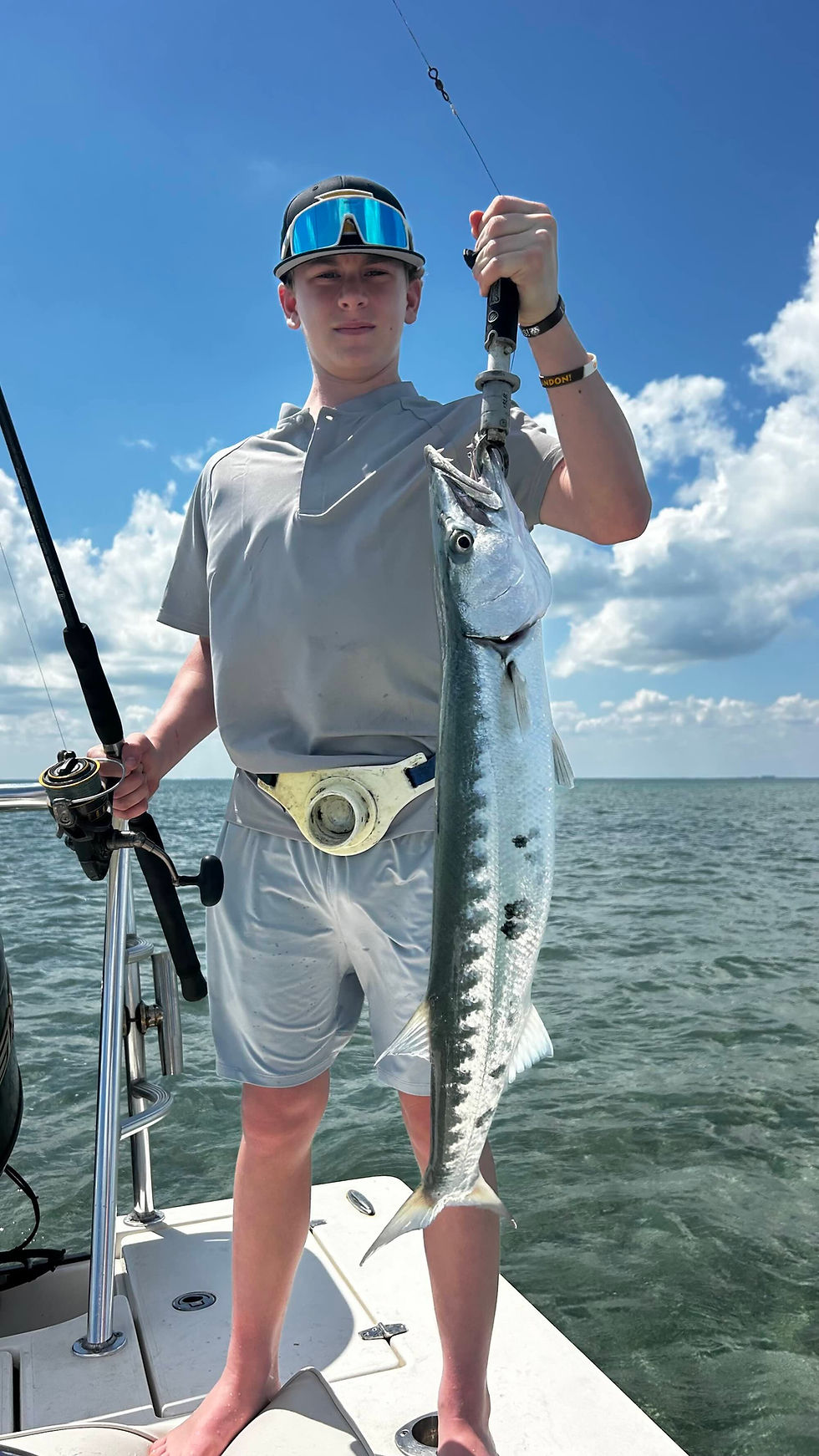
Harry Klisch is a 10th grade student at Landon in Bethesda, Maryland. He loves being outdoors and on the water fishing and surfing, just about as much as he loves baseball. He grew up fishing on the Chesapeake Bay (rockfish), but takes advantage of every opportunity to lure in something new and different – Miami (grouper, barracuda, African pompano), Mexico (trophy tarpon), Costa Rica (yellowfin tuna and mahi), and the Peruvian Amazon (piranha). After learning about the invasive blue catfish threatening the Chesapeake Bayecosystem – and that it is actually helpful to remove as many as you can (instead of limiting out or catch & release) – he wanted to get involved and have fun seeing just how many he could catch. He organized the inaugural Bait • Catch • Donate trip as a way to bring his teammates and friends together, enjoy a day on the water, and fish in support of two great causes – protecting the Chesapeake Bay watershed and fighting food insecurity by donating the catch. This first trip was a huge success, with 13 volunteer anglers, across 5 schools, removing 60 invasive catfish, and donating 60 lbs. of raw protein to Bread For The City for use in 240 meals. His goal now is to scale the model and empower more teen anglers across the DMV to get involved.